Problem
Running a household is a job. Remembering the dentist, the shoe sizes, the birthday gift, the vaccine schedule. It's real cognitive work, it's distributed unequally, and it's invisible, which is exactly why it doesn't get shared. Task apps don't fix this. They give you a list, and a list is just the invisible work written down. It doesn't help you hand any of it away.
What I designed
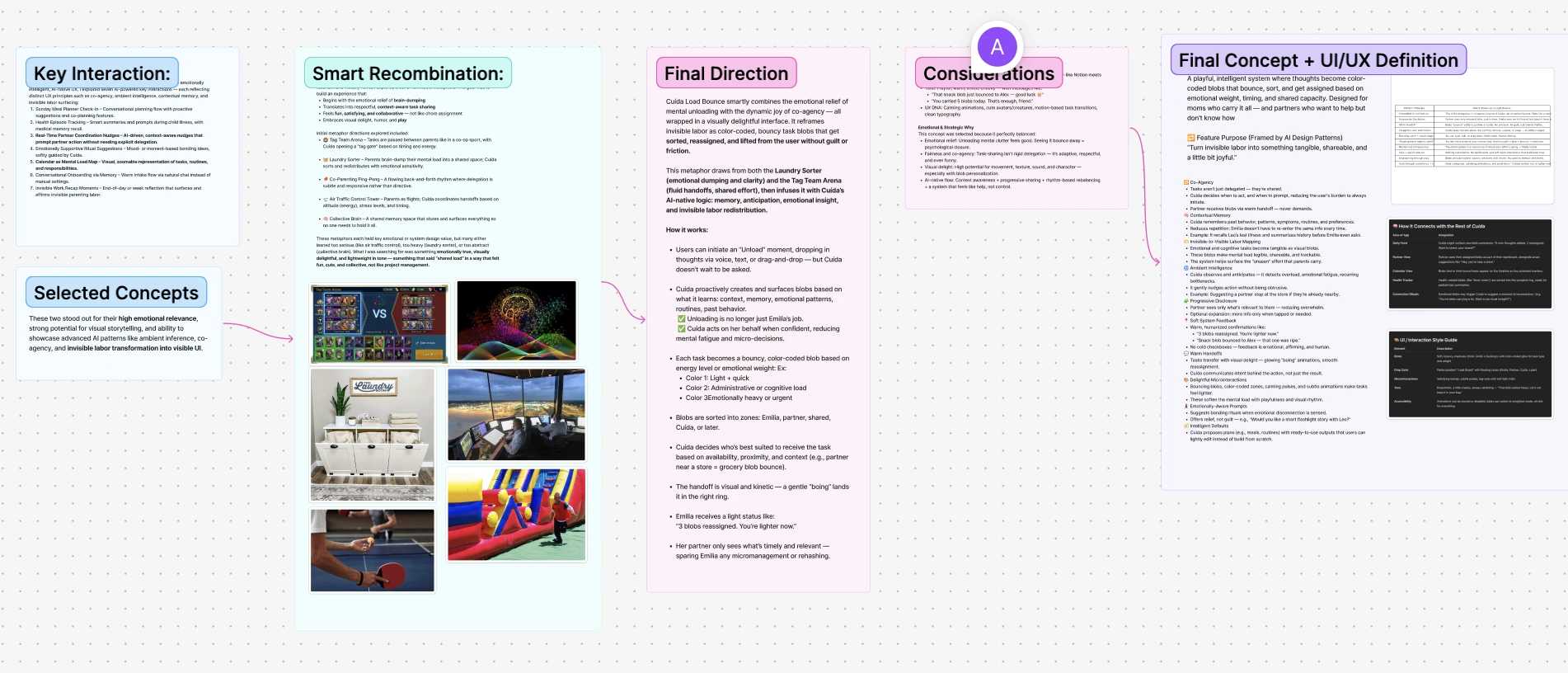
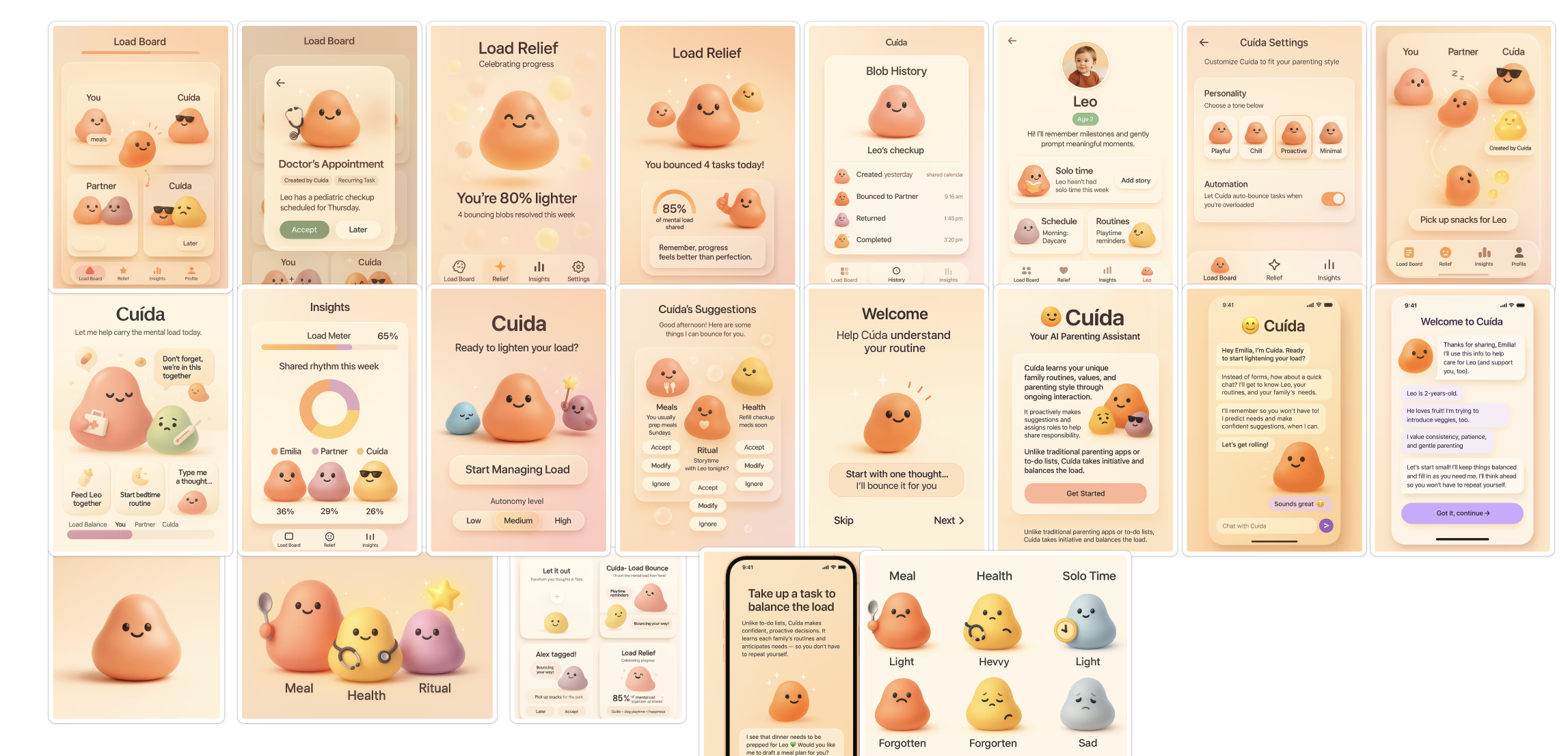
Cuída Load Bounce. Tasks are carried by small colour-coded creatures that bounce around, and they visibly weigh something. You can see your load. You can hand a creature to someone else and watch your load get lighter.
AI sits underneath as an ambient partner rather than an assistant you talk to. It sorts your brain dump into things that make sense, remembers context so you don't repeat yourself, and suggests what could go to someone else. It never asks you to manage it.
Underneath the blobs are the same patterns I use in enterprise work: progressive disclosure, contextual memory, warm handoffs. The rigour is identical. The tone is not.
Why I made it
I built this during Become an AI Product Designer, a course that let me pick my own problem to solve. I chose this one because I'm a mom, this is my actual life, and I wanted to prove to myself that the same thinking I bring to a compliance audit works on a problem that runs on feeling rather than rules.